
Foundations & equipment pads
Footings, stem walls, and anchor-bolted equipment pads poured to the structural drawings.
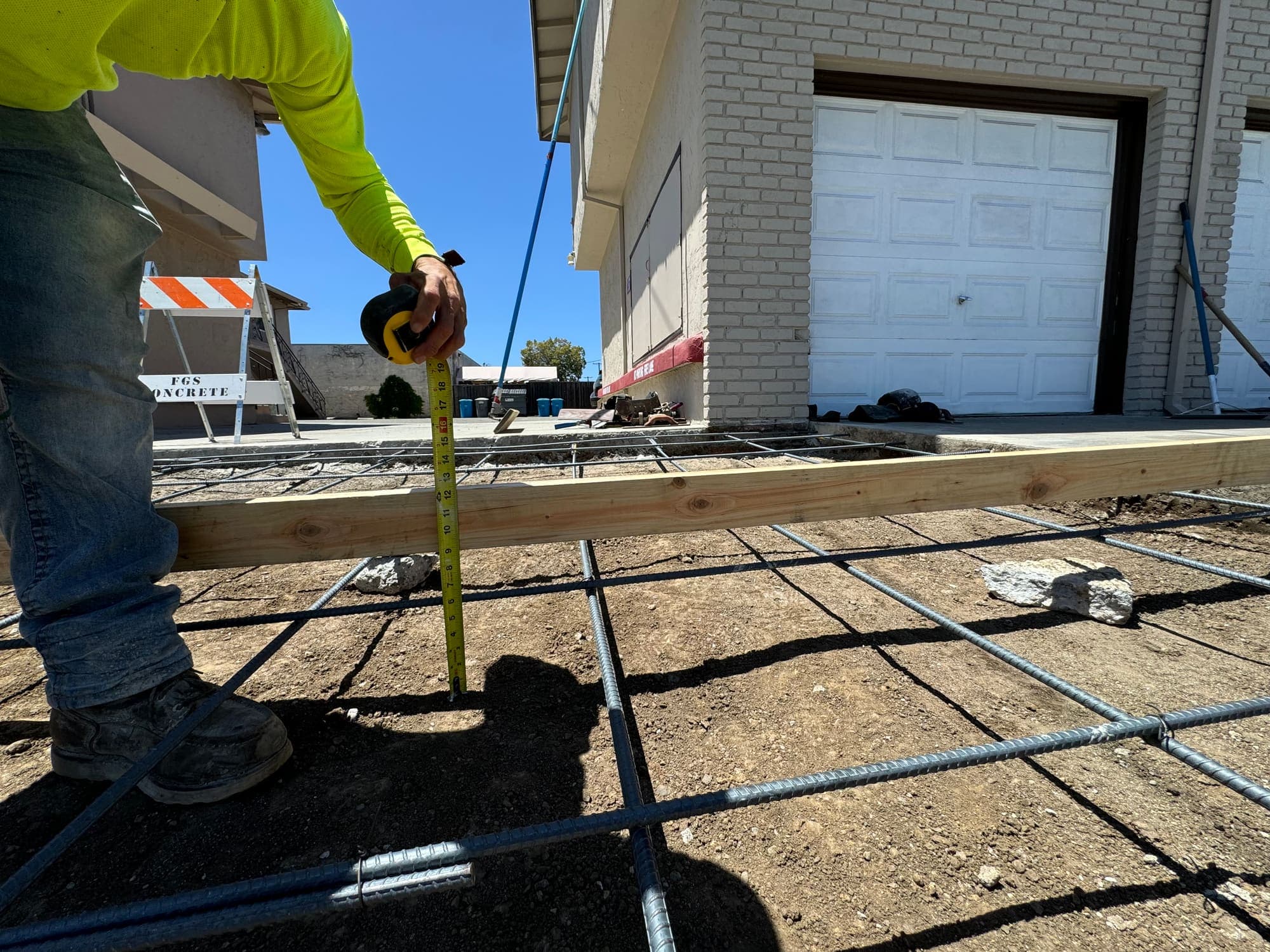
A pad or footing is only as good as what is underneath it and what is cast into it. We excavate to bearing, compact the subgrade rather than pouring over loose spoil, place reinforcement to the structural drawings, and set anchor bolts to a template so the equipment actually lands on the bolt pattern it was ordered with — the single most expensive thing to get wrong on an industrial pad.
We coordinate with your engineer and the inspector rather than working around them: rebar size, spacing, cover, and embedment get verified before the pour, and we hold for special inspection where the drawings call for it. For industrial users, that includes heavy-duty pads built for real duty cycles — dolly pads, dock approaches, and equipment bases that see loads a standard slab was never designed to carry.
Standards & verification
- BEARING
- Excavated to bearing, subgrade compacted before steel
- REINFORCEMENT
- Size, spacing, and cover verified against the drawings
- ANCHORS
- Anchor bolts set to template and checked before the pour
- INSPECTION
- Held for special inspection where drawings require it
- DUTY
- Heavy-duty sections for forklift, trailer, and equipment loads
- LICENSE
- CSLB #1161508 — General Engineering (A)
Before you call
Can you set anchor bolts to our equipment's template?+
Yes, and we check the pattern before the pour rather than after. Give us the equipment's anchor plan or the physical template and we set and verify to it — a pad that misses the bolt pattern is the most expensive correction on the job.
Do you work from engineered drawings?+
Yes. We build to the structural drawings, verify rebar size, spacing, cover, and embedment before the pour, and hold for special inspection where the drawings or the jurisdiction require it. If the drawings and field conditions disagree, we stop and raise it rather than guessing.
Can you pour a pad inside an operating building?+
Routinely. We sequence around production, control dust and cuts inside working space, keep aisles and haul routes open, and phase pours so a facility never goes fully down for a pad.
How long before we can set equipment on it?+
It depends on the design strength and the load, and it is the engineer's call rather than ours. We pour to the specified mix, cure it properly, and can arrange test cylinders where the schedule depends on verified strength.