
Trenching & excavation
Utility trenching, shoring, backfill, and restoration inside working facilities.
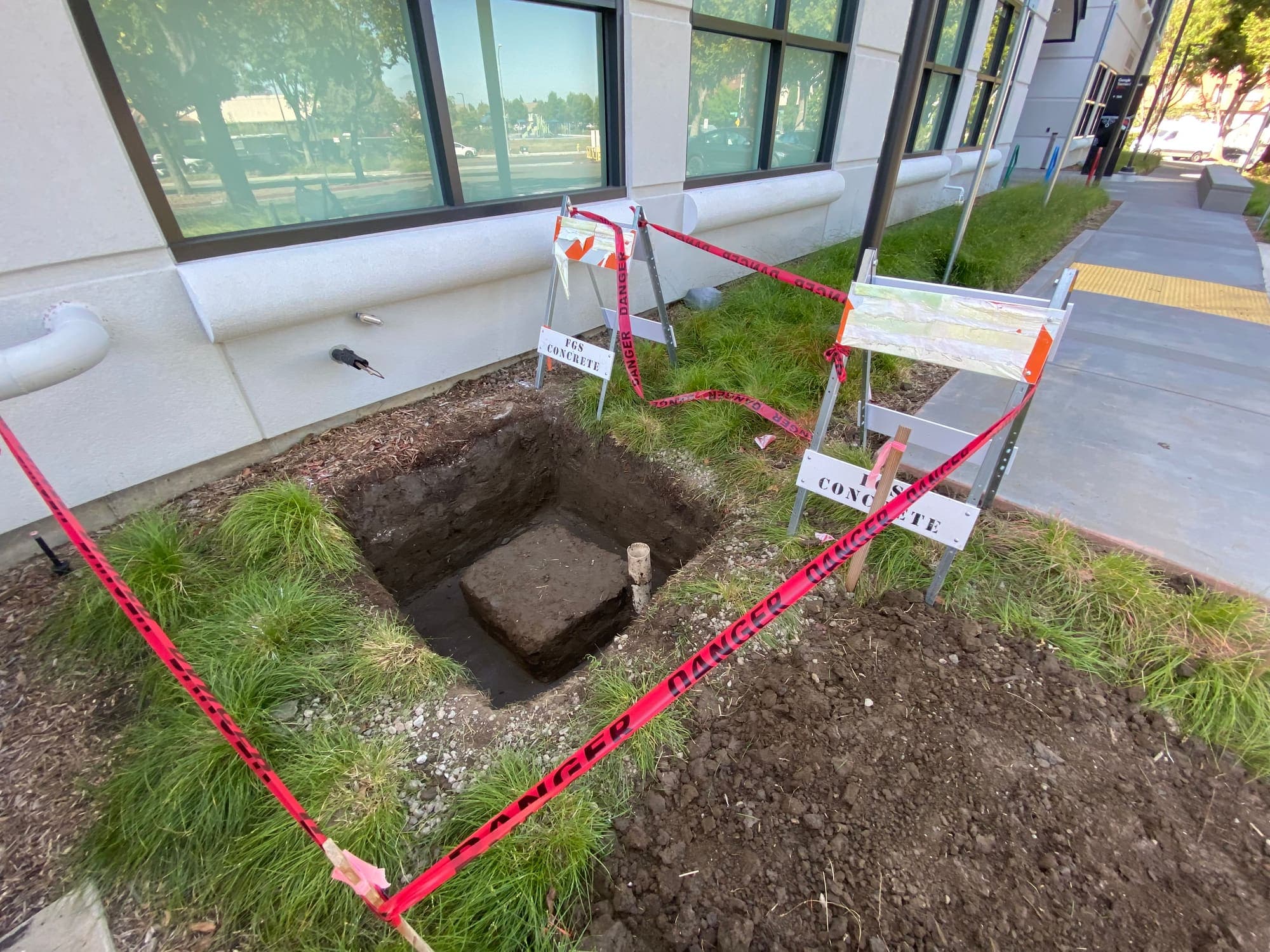
A trench is judged twice: once when the utility goes in, and again a year later when the patch either held or telegraphed a scar across the pavement. Most trench failures are backfill failures — material placed too thick, compacted too little, or over a subgrade that was never right. We compact in lifts, verify as we go, and restore the surface to the standard the jurisdiction or the property actually requires.
Safety and locates are not optional and we do not treat them that way. California law requires notifying the regional notification center before excavation, and trenches deep enough for a person to enter carry a Cal/OSHA permit requirement and engineered protection — sloping, benching, or shoring. We plan those into the schedule up front, which is exactly why our trenches do not turn into a stop-work conversation on day two.
Standards & verification
- LOCATES
- USA North 811 notified before any excavation begins
- PERMIT
- Cal/OSHA permit for excavations 5 ft and deeper
- PROTECTION
- Sloped, benched, or shored per Cal/OSHA requirements
- BACKFILL
- Placed and compacted in lifts, verified as we go
- RESTORATION
- Patched to agency or property standard, not just filled
- OPERATIONS
- Sequenced around production — haul routes stay open
Before you call
Do you call in utility locates?+
Always, and it is the law — California requires notifying the regional notification center (USA North 811) a set number of working days before excavation. We mark the dig area, place the ticket, and honor the locate marks. We also pothole to physically confirm critical crossings rather than trusting paint alone.
Do trenches need a permit?+
Excavations that are deep enough for a worker to enter — 5 feet and deeper — require a Cal/OSHA excavation permit and engineered protection through sloping, benching, or shoring. Work in the public right-of-way also needs an encroachment permit. We handle both.
Why do trench patches fail and sink?+
Nearly always backfill. Material placed in lifts that are too thick, compacted too little, or dropped over a soft subgrade will consolidate under traffic and pull the patch down with it. Compaction in controlled lifts — or a slurry backfill where lift compaction is impractical — is what keeps the surface flat.
Can you trench inside an operating facility?+
Yes, and much of our trenching is exactly that. We sequence around production schedules, keep haul and forklift routes open, plate or bridge crossings that have to stay live, and control dust and debris inside working space.